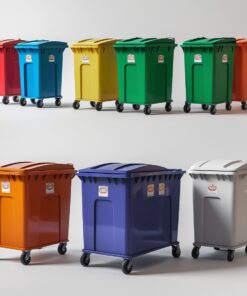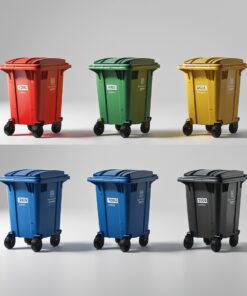

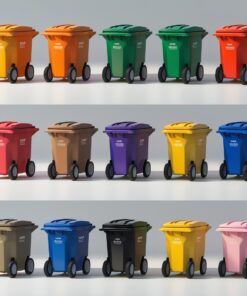
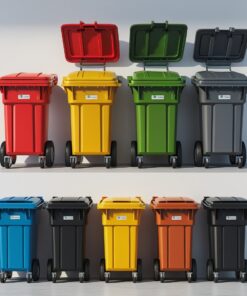
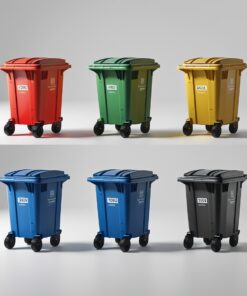
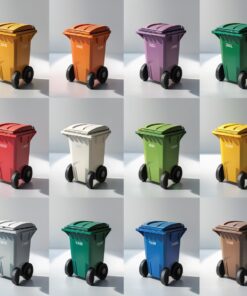
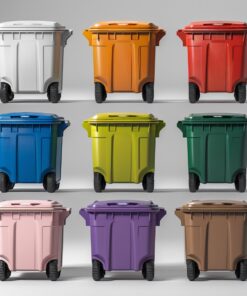
Now, considering color variation, a red 120-liter wheelie bin finds its purpose in urban streets, ensuring effective waste disposal without taking up excessive space. An orange 240-liter wheelie bin is ideal for residential areas, providing an efficient solution for weekly garbage collection. A yellow 550-liter wheelie bin stands resilient in commercial districts, collecting recyclables to reduce landfill impact. The green 660-liter wheelie bin, placed in public gardens, encourages responsible waste disposal while maintaining an eco-friendly image. The blue 770-liter wheelie bin serves as an effective waste segregation tool in airports and malls, helping to streamline cleanliness efforts. The indigo 1000-liter wheelie bin, stationed near large office buildings, meets the needs of high-volume waste collection. Finally, a violet 1100-liter wheelie bin, known for its extra-large capacity, plays an essential role in large institutions, helping to maintain a hygienic environment for employees and visitors alike.
1000 liter red wheelie bin
R10 600,00
. Color-Coding of Wheelie Bins
Wheelie bins are often color-coded to indicate the type of waste they are meant to hold. This system helps streamline waste segregation and recycling efforts.
|
Color
|
Type of Waste
|
Common Uses
|
|---|---|---|
|
Black
|
General waste
|
Non-recyclable household and commercial waste
|
|
Green
|
Food and organic waste
|
Composting, biodegradable waste
|
|
Blue
|
Recyclables (plastics, paper)
|
Plastic bottles, packaging, newspapers
|
|
Yellow
|
Mixed recyclables
|
General recycling
|
|
Red
|
Hazardous waste
|
Chemicals, batteries, medical waste
|
|
Brown
|
Garden and organic waste
|
Leaves, grass clippings, soil
|
4. Special Features of Wheelie Bins
Some wheelie bins come with additional features to enhance functionality:
- Locking Mechanisms : Prevent unauthorized access or tampering.
- Wheels : Two or four wheels for easy mobility.
- Handles : Ergonomic handles for lifting and tipping.
- RFID Tags : For tracking and monitoring waste collection schedules.
- Ventilation Holes : Reduce weight by allowing air circulation in organic waste bins.
- UV Protection : Prevents fading and degradation from sunlight exposure.
5. Choosing the Right Wheelie Bin
When selecting a wheelie bin, consider the following factors:
- Volume of Waste : Estimate how much waste is generated daily or weekly.
- Frequency of Collection : If collections are infrequent, opt for a larger bin.
- Type of Waste : Choose bins designed for specific waste types (e.g., hazardous, organic, recyclables).
- Space Availability : Slimline or smaller bins are ideal for tight spaces.
- Durability : Ensure the bin can withstand local weather conditions and usage demands.
Final Summary
Wheelie bins are available in a wide range of types and sizes to cater to diverse waste management needs. They are classified by material (plastic, metal, composite), design (standard, slimline, split compartment), and size (40L to 1,100L). Additionally, color-coding helps segregate waste effectively. The choice of bin depends on the volume and type of waste, available space, and collection frequency.
Boxed Answer: {Wheelie bins come in various types (plastic, metal, composite; standard, slimline, split compartment) and sizes ranging from 40 liters (10 liter s) to 1,100 liters (290 liter s). They are color-coded for waste segregation (e.g., black for general waste, blue for recyclables). Selection depends on waste volume, type, space availability, and collection frequency.}
Be the first to review “1000 liter red wheelie bin” Cancel reply
Related products
Wheelie Bins
Wheelie Bins
Wheelie Bins
Wheelie Bins
Wheelie Bins
Wheelie Bins
Wheelie Bins
Wheelie Bins


Reviews
There are no reviews yet.