

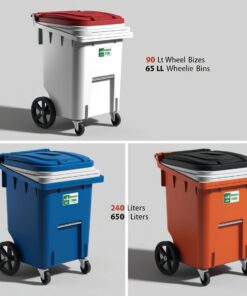
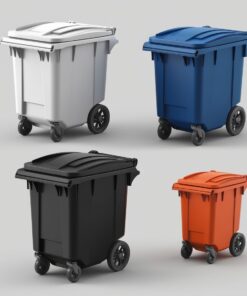
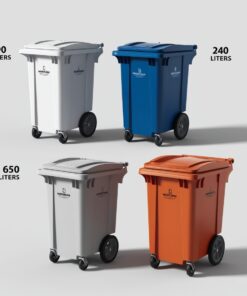

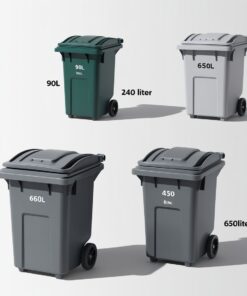
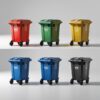
Wheelie bins, also known as mobile garbage bins or dumpsters, are widely used for waste management in households, businesses, and industrial settings. They come in various types and sizes , each designed to meet specific needs based on the volume of waste, type of waste, and frequency of collection. Below is a comprehensive guide to the types and sizes of wheelie bins:
1. Types of Wheelie Bins
Wheelie bins are categorized based on their design, material, and intended use.
A. Based on Material
- Plastic Wheelie Bins
- Made from durable, high-density polyethylene (HDPE) or polypropylene (PP).
- Lightweight, corrosion-resistant, and weatherproof.
- Ideal for general household and commercial waste.
- Metal Wheelie Bins
- Constructed from galvanized steel or aluminum.
- Extremely durable and fire-resistant.
- Used in industrial settings or areas with high-security requirements.
- Composite Wheelie Bins
- Combine plastic and metal components for enhanced durability and reduced weight.
- Suitable for heavy-duty applications.
B. Based on Design
- Standard Wheelie Bins
- Equipped with two wheels and a hinged lid for easy mobility and protection against pests and weather.
- Commonly used for general waste disposal.
- Slimline Wheelie Bins
- Narrower design for better space utilization.
- Ideal for urban areas or tight spaces like apartment complexes.
- Lidded vs. Open-Top Bins
- Lidded : Protects waste from rain, pests, and odors.
- Open-Top : Easier to fill but less secure; often used for recyclables or bulky waste.
- Split Compartment Bins
- Divided into sections for sorting different types of waste (e.g., recyclables vs. general waste).
- Promotes waste segregation and recycling efforts.
- Hazardous Waste Bins
- Designed for safe disposal of hazardous materials like chemicals, medical waste, or sharps.
- Often color-coded and labeled for identification.
- Food Waste Bins
- Smaller bins specifically for organic waste.
- Often ventilated to reduce odors and prevent decomposition.
- Recycling Bins
- Color-coded bins for separating recyclable materials like plastics, glass, paper, and metals.
- May have multiple compartments or be part of a split-compartment system.
2. Sizes of Wheelie Bins
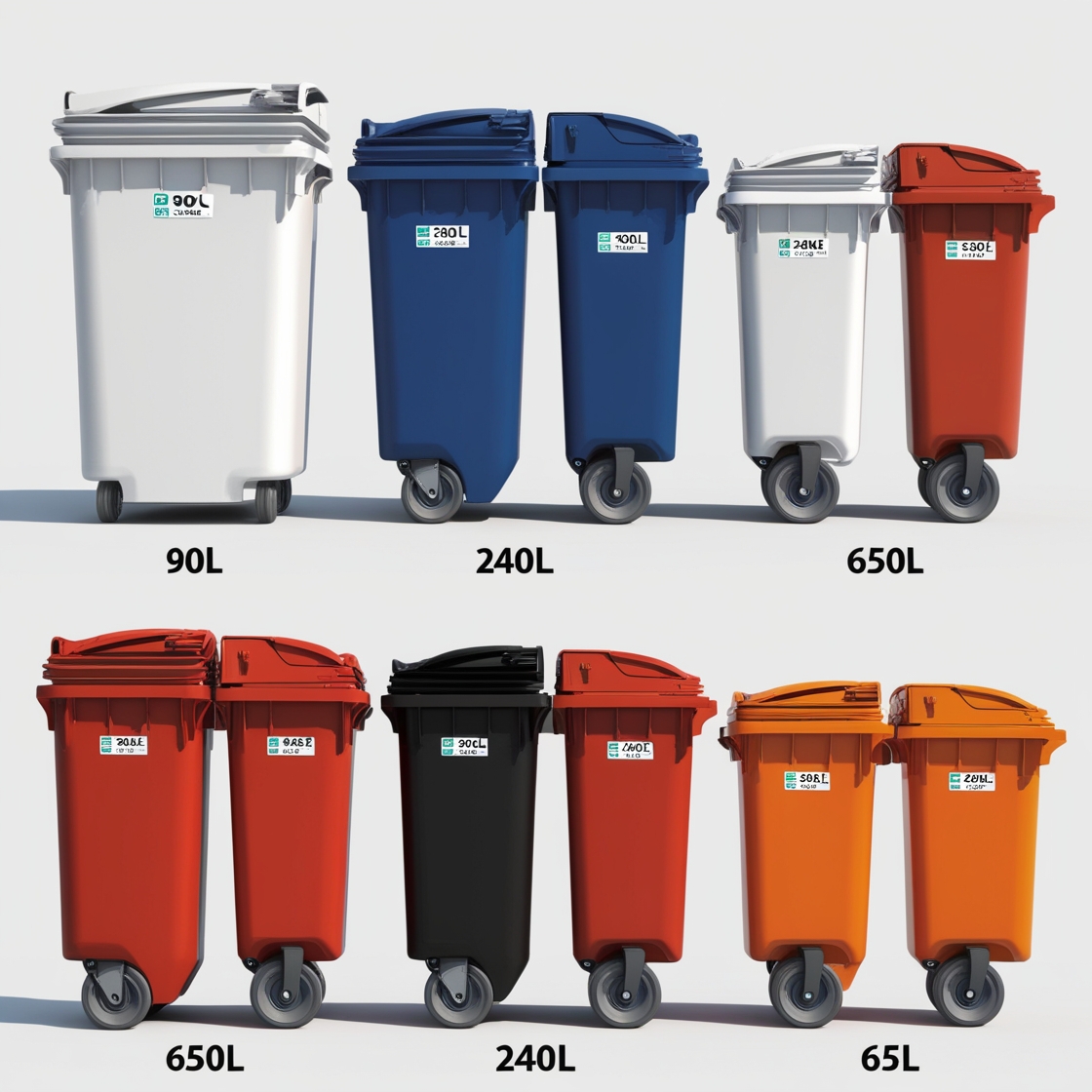
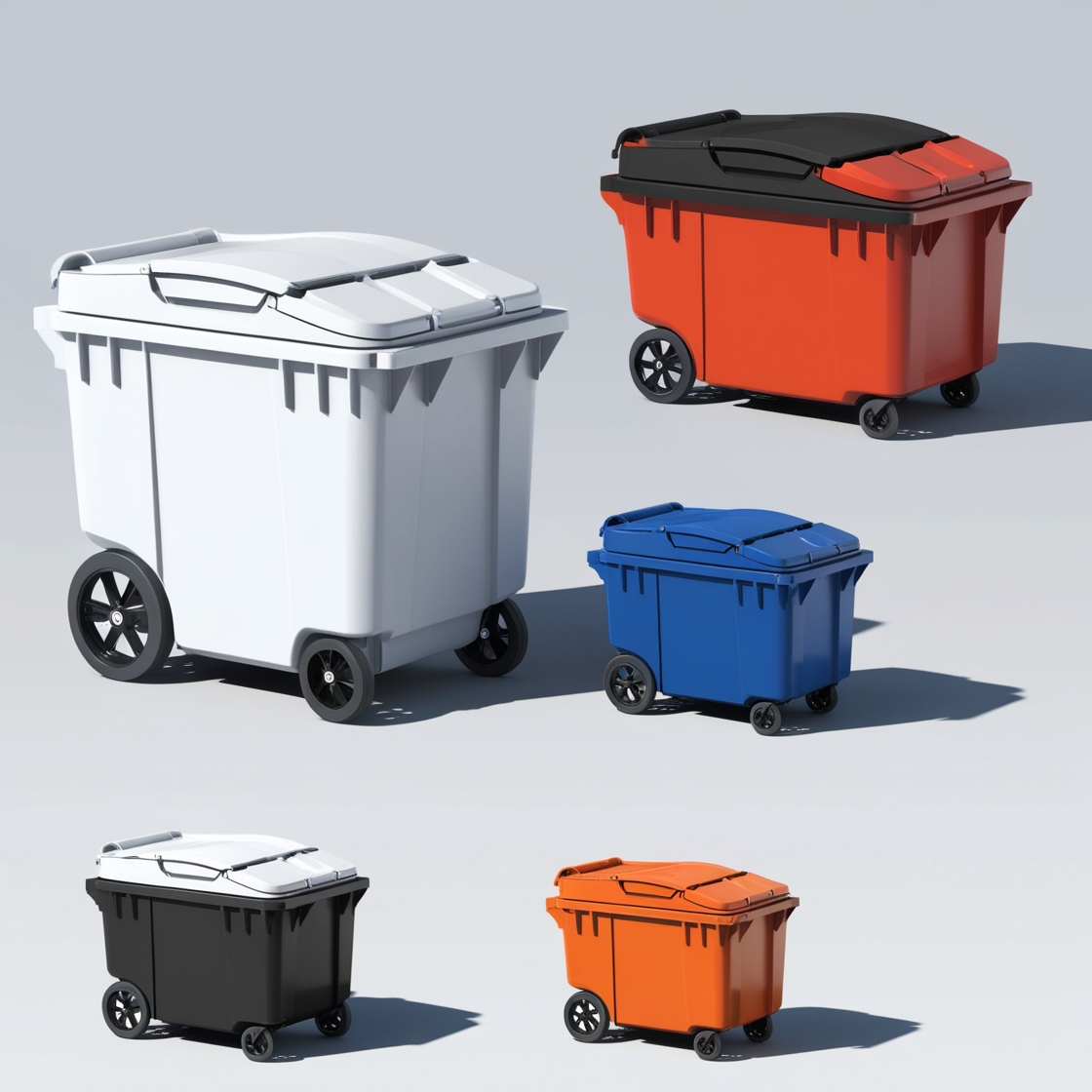
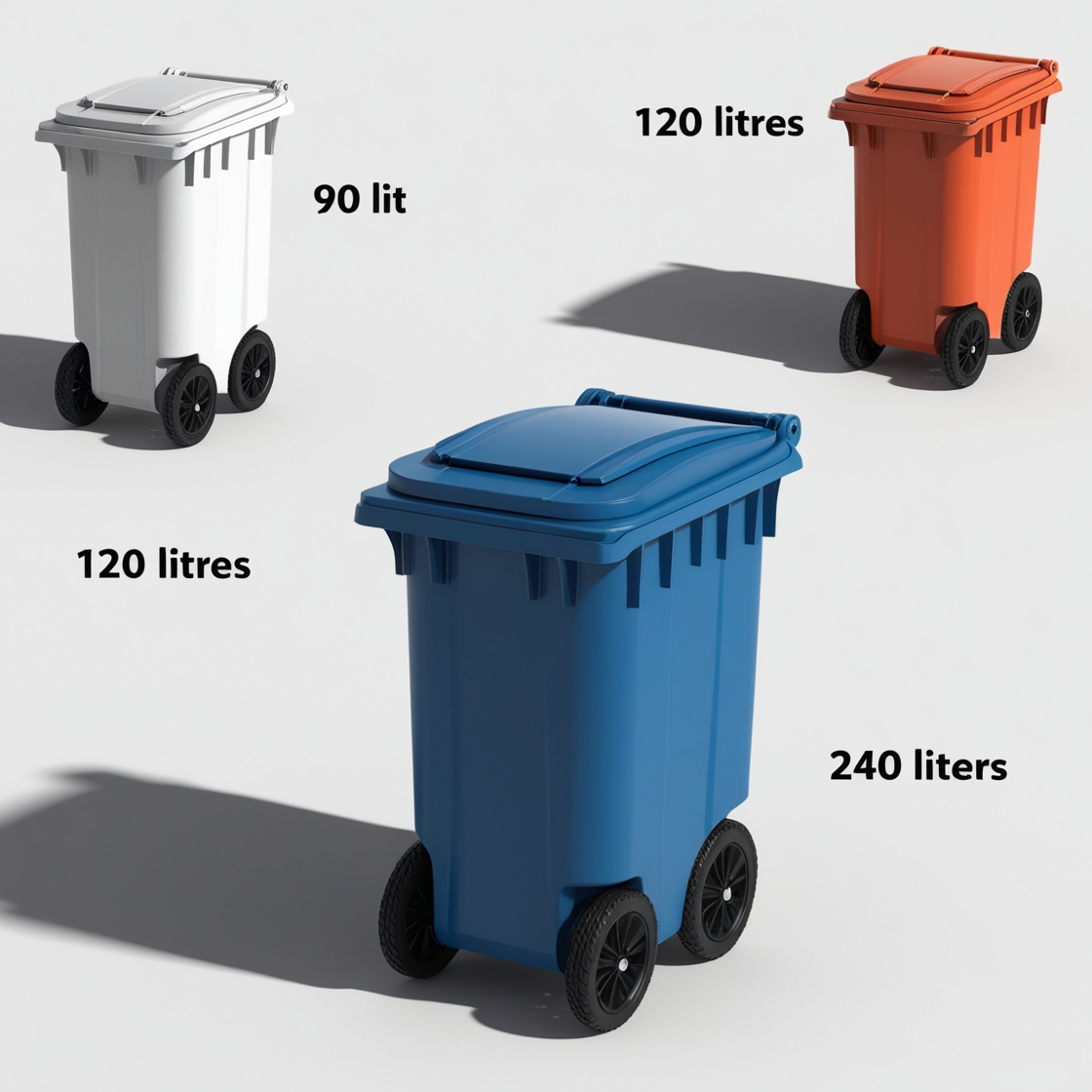
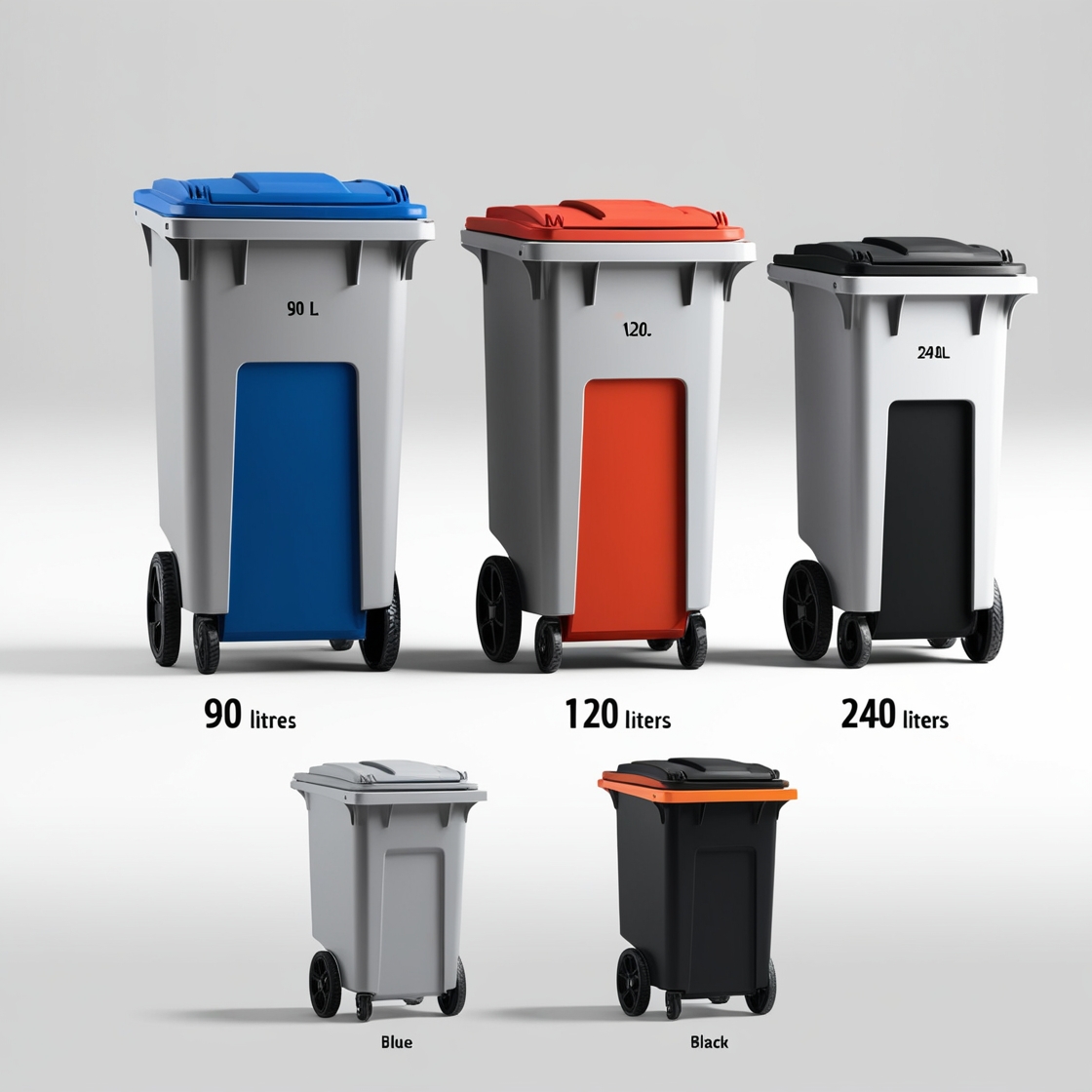
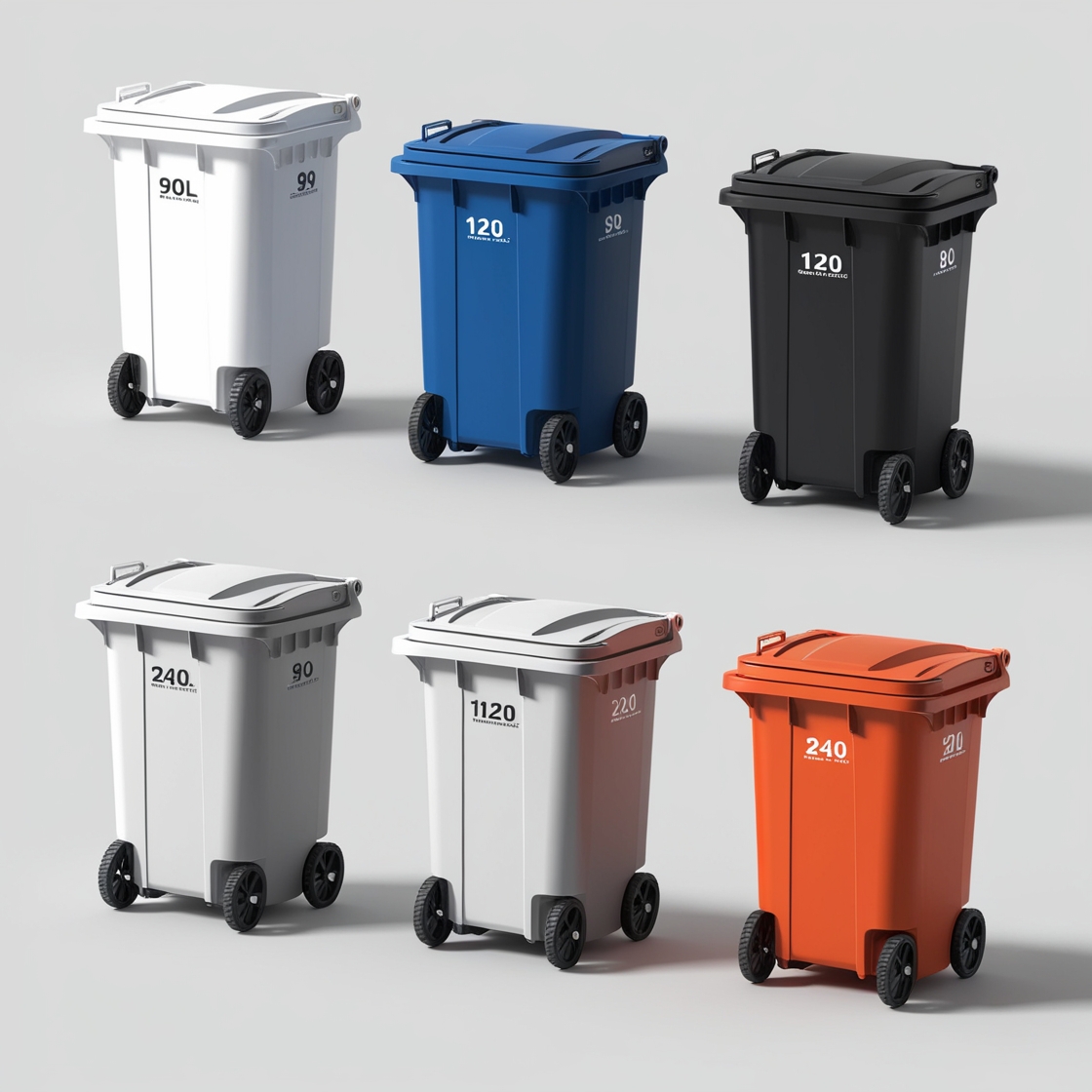
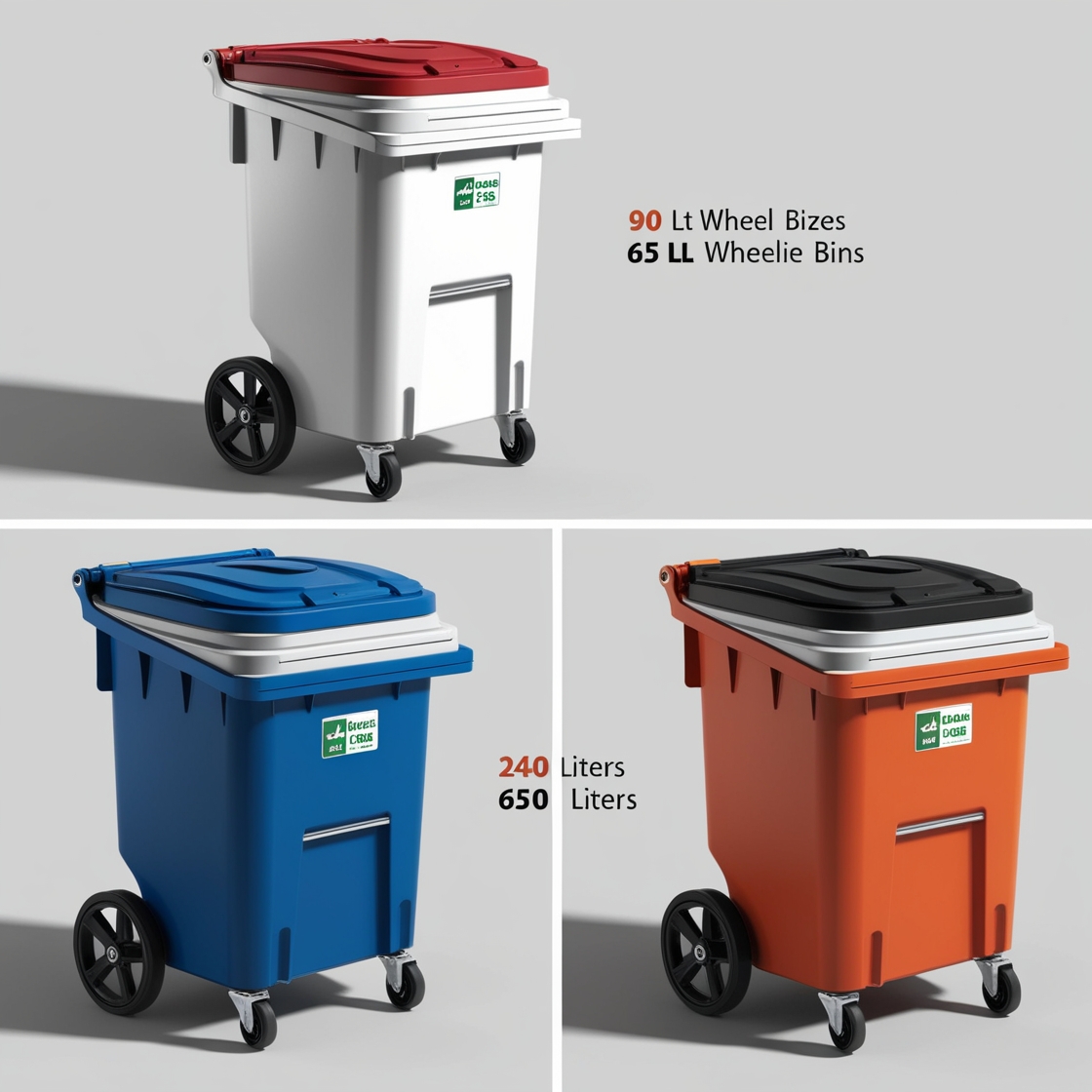
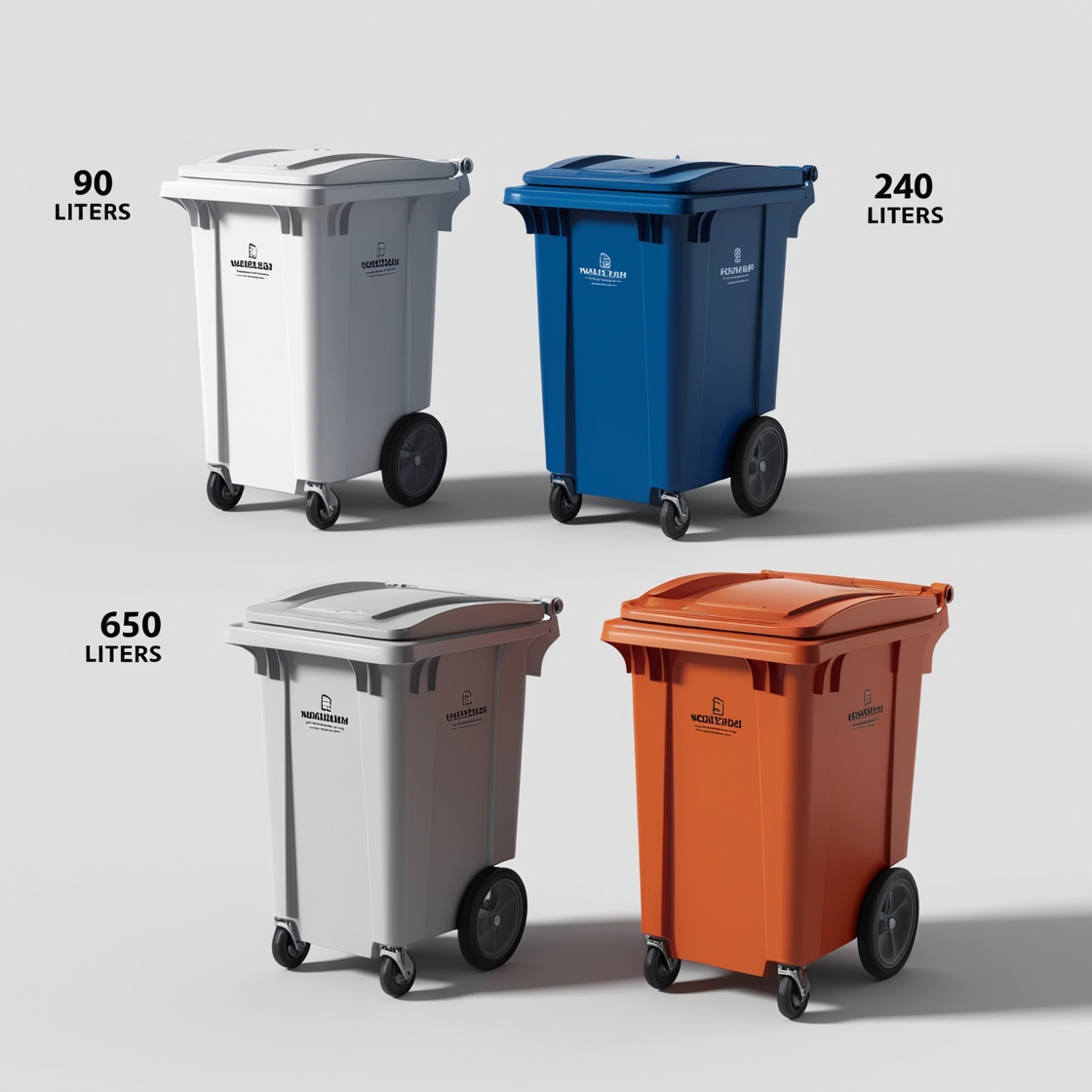
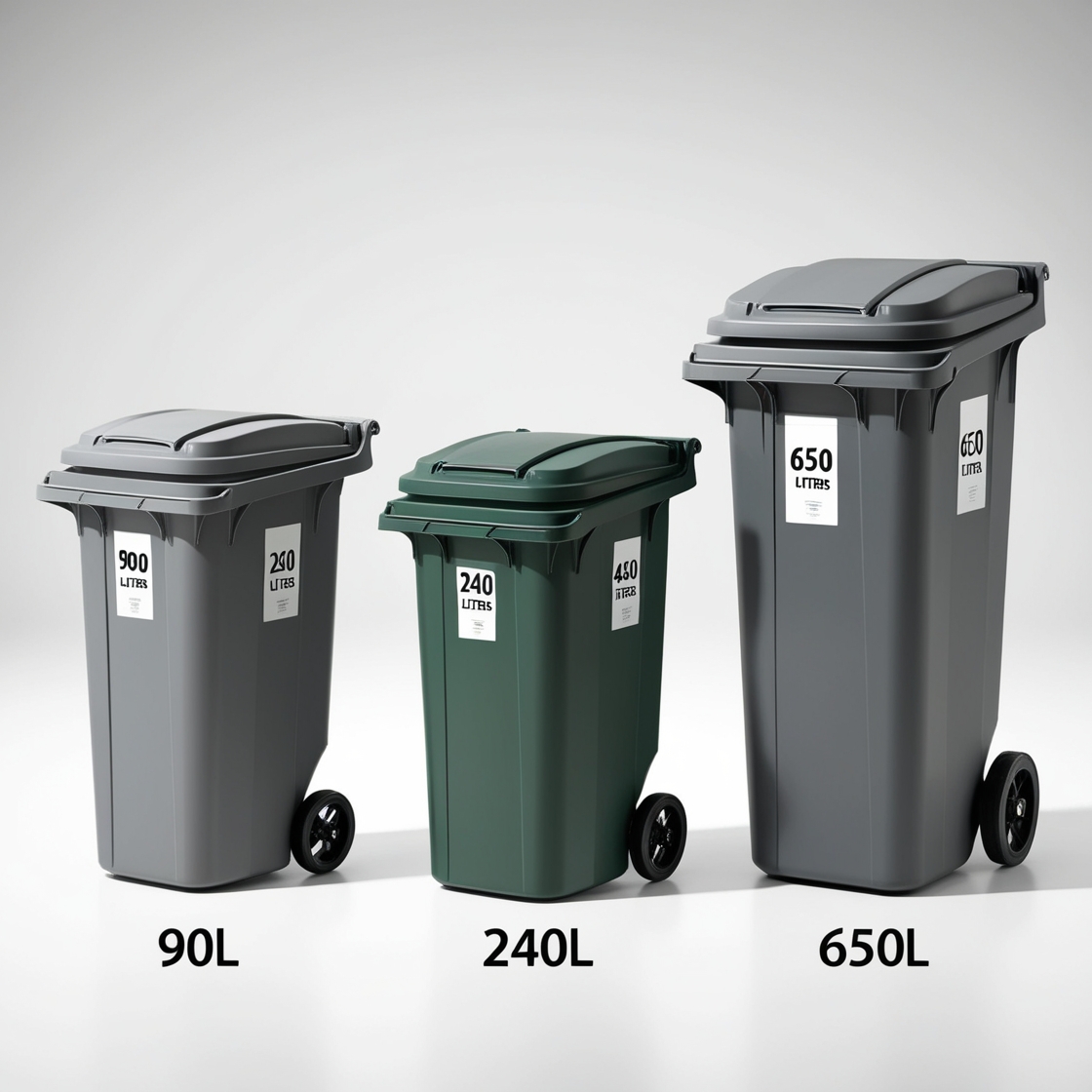
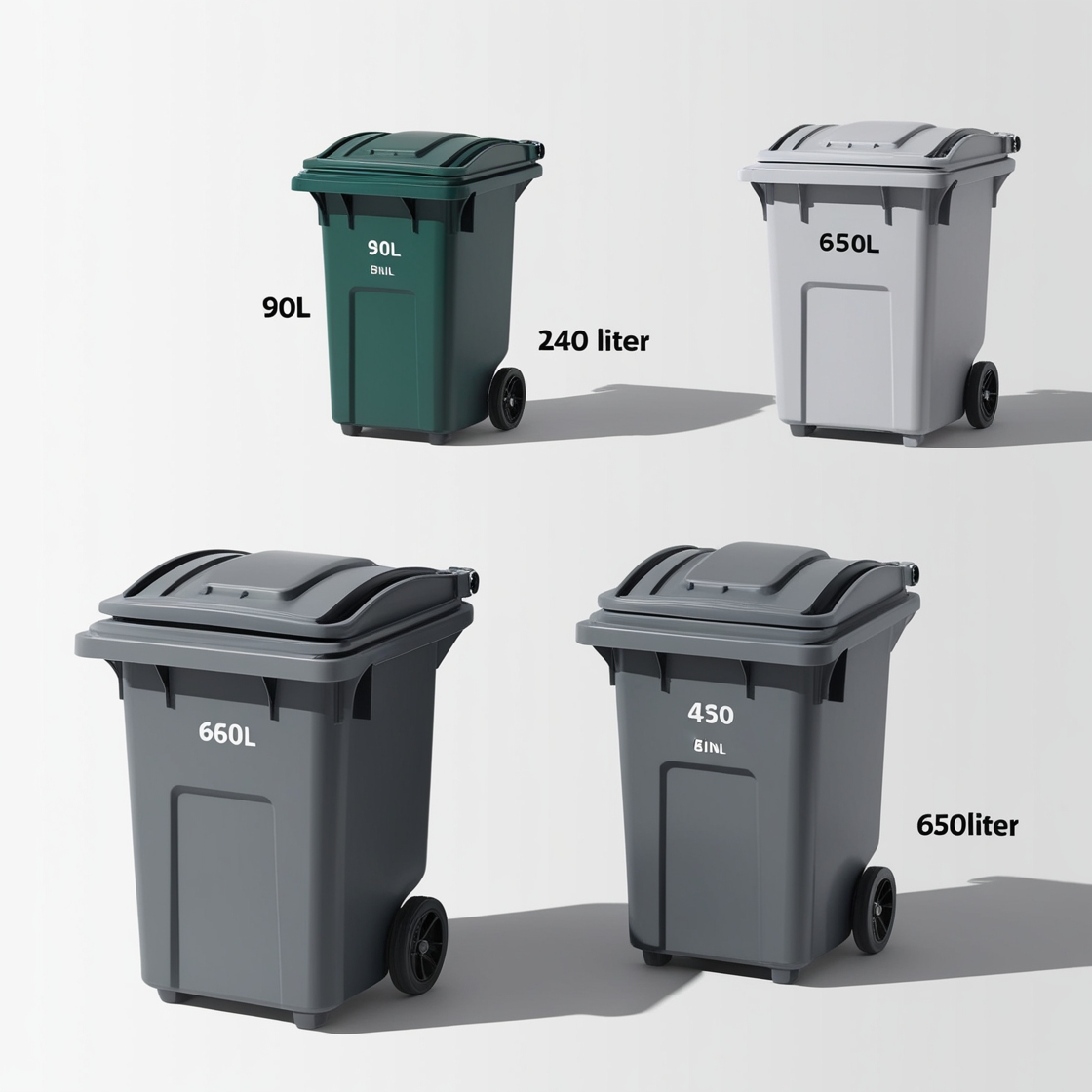
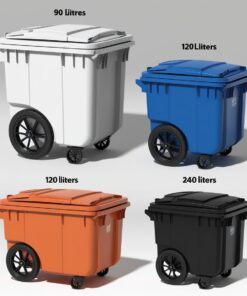
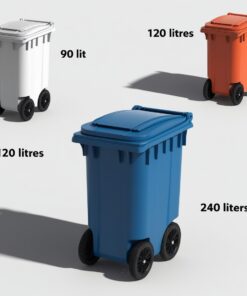
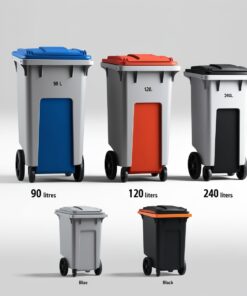
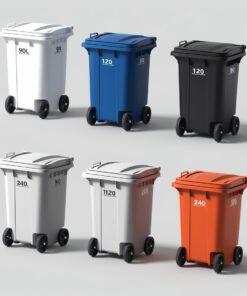
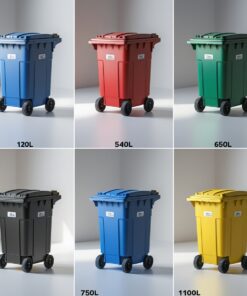
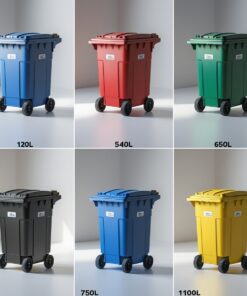
Wheelie bins are available in a range of sizes, typically measured in liters (L) or gallons (gal) . The size you choose depends on the volume of waste generated and the frequency of collection.
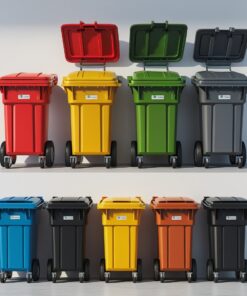
3. Color-Coding of Wheelie Bins
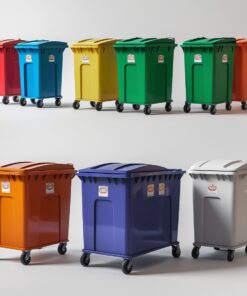
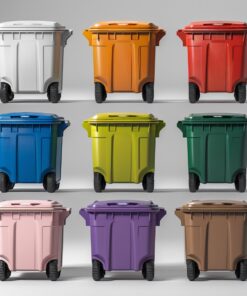
Wheelie bins are often color-coded to indicate the type of waste they are meant to hold. This system helps streamline waste segregation and recycling efforts.
4. Special Features of Wheelie Bins
Some wheelie bins come with additional features to enhance functionality:
- Locking Mechanisms : Prevent unauthorized access or tampering.
- Wheels : Two or four wheels for easy mobility.
- Handles : Ergonomic handles for lifting and tipping.
- RFID Tags : For tracking and monitoring waste collection schedules.
- Ventilation Holes : Reduce weight by allowing air circulation in organic waste bins.
- UV Protection : Prevents fading and degradation from sunlight exposure.
5. Choosing the Right Wheelie Bin
When selecting a wheelie bin, consider the following factors:
- Volume of Waste : Estimate how much waste is generated daily or weekly.
- Frequency of Collection : If collections are infrequent, opt for a larger bin.
- Type of Waste : Choose bins designed for specific waste types (e.g., hazardous, organic, recyclables).
- Space Availability : Slimline or smaller bins are ideal for tight spaces.
- Durability : Ensure the bin can withstand local weather conditions and usage demands.
Final Summary
Wheelie bins are available in a wide range of types and sizes to cater to diverse waste management needs. They are classified by material (plastic, metal, composite), design (standard, slimline, split compartment), and size (40L to 1,100L). Additionally, color-coding helps segregate waste effectively. The choice of bin depends on the volume and type of waste, available space, and collection frequency.
Boxed Answer: {Wheelie bins come in various types (plastic, metal, composite; standard, slimline, split compartment) and sizes ranging from 40 liters (10 gallons) to 1,100 liters (290 gallons). They are color-coded for waste segregation (e.g., black for general waste, blue for recyclables). Selection depends on waste volume, type, space availability, and collection frequency.}
Be the first to review “Wheelie bins”
Related products
Wheelie Bins
Wheelie Bins
Wheelie Bins
Wheelie Bins
Wheelie Bins
Wheelie Bins
Wheelie Bins
Wheelie Bins
Reviews
There are no reviews yet.